There is a moment, about fifty minutes past the last roundabout of Marrakech, when the road narrows, the olive groves thicken, and the Atlas Mountains stop being a backdrop and become a presence. By the time the car turns onto the unmarked track above the village of Marigha, I had already stopped checking my phone. This, I would later understand, is precisely the intention. Olinto does not want your attention divided. It wants it entirely.
I have visited a great many luxury properties built to impress. Olinto is not one of them. It was built, quite simply, to be lived in, by one man in particular, and it shows in every stone.
A Prince Who Builds His Own Houses
To understand Olinto, you first have to understand Prince Fabrizio Ruspoli di Poggio Suasa, because this is not a hotel with an owner attached as a footnote. It is, in the truest sense, his house, and guests are invited into it.
The Ruspoli name carries weight in Rome that few aristocratic lines still do, a lineage tracing back to a general under Charlemagne in the eighth century, papal nobility, a Marquis who was Handel's most important patron in Rome and who, in the Arcadian Academy of the seventeenth century, took the pastoral pen name Olinto. There is the Marquis de Lafayette in the family tree, and Alessandro "Dado" Ruspoli, the free spirit who inspired Fellini's La Dolce Vita. It is, in short, a family that has always understood the art of living well, and of living beautifully.
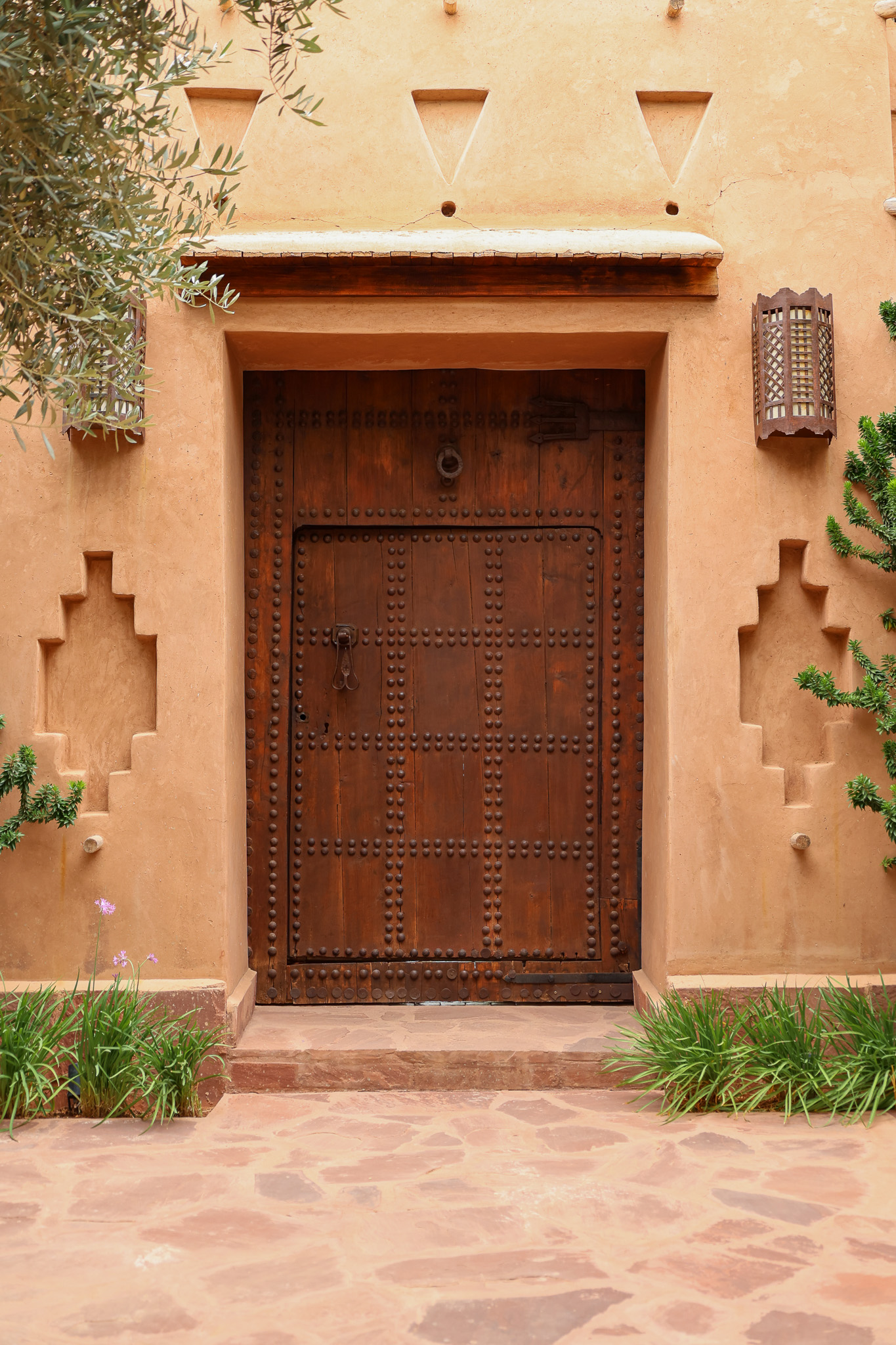
Fabrizio himself has spent forty years proving he inherited that instinct. In the early 1990s, he transformed a historic house in the Marrakech medina into La Maison Arabe, the city's first true boutique riad and, for decades, the benchmark against which every Moroccan hotel measured itself. When he eventually sold it, in search of a quieter life, most assumed his hospitality career had reached its final chapter. Instead, in 2019, he bought a stretch of land in the Ouirgane valley, at the foot of Mount Toubkal, and set about building Olinto with his own hands, as architect, interior designer, and garden creator all at once. No committee. No design firm. One man's eye, applied to every wall, every doorway, every tree.
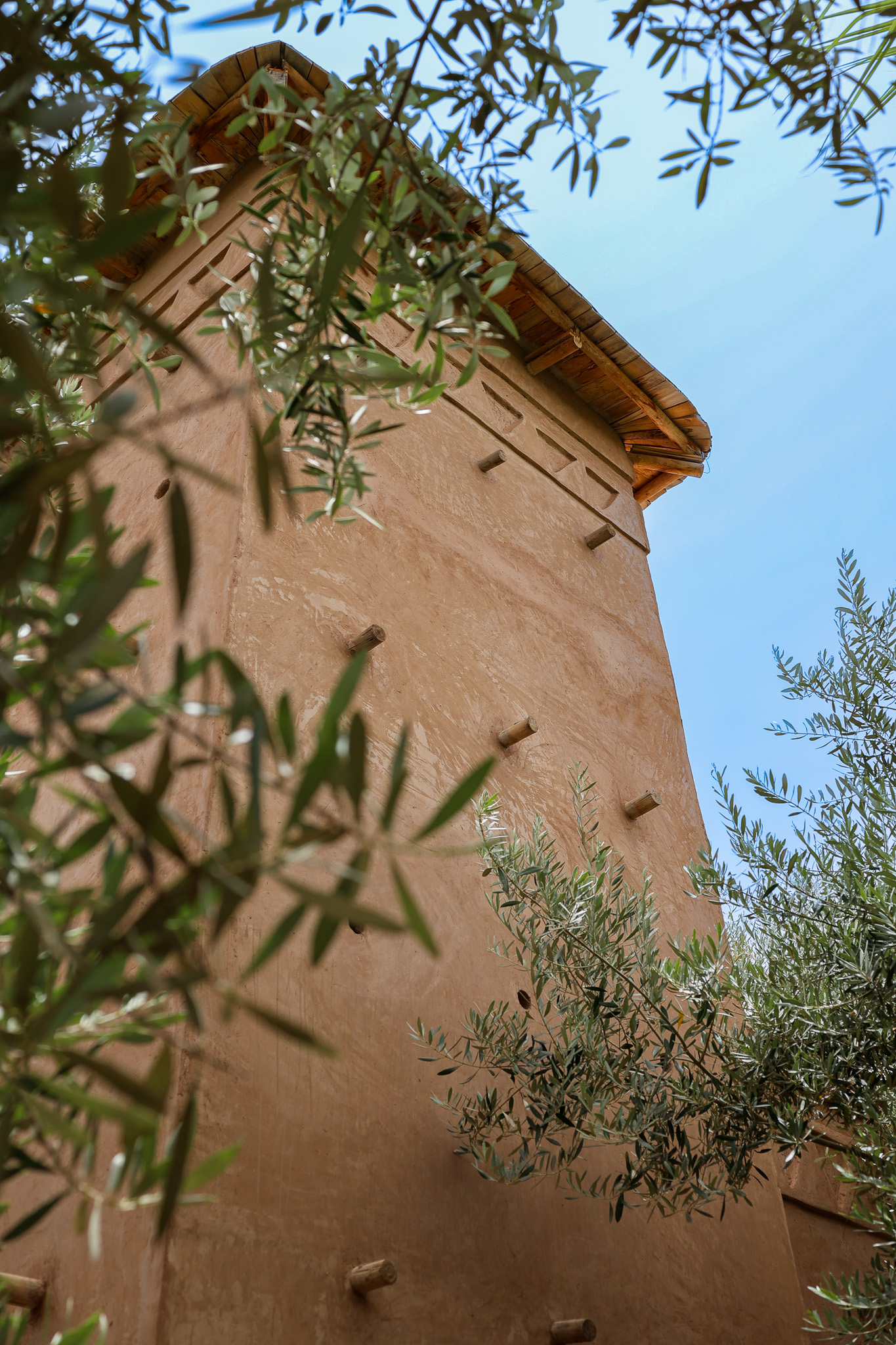
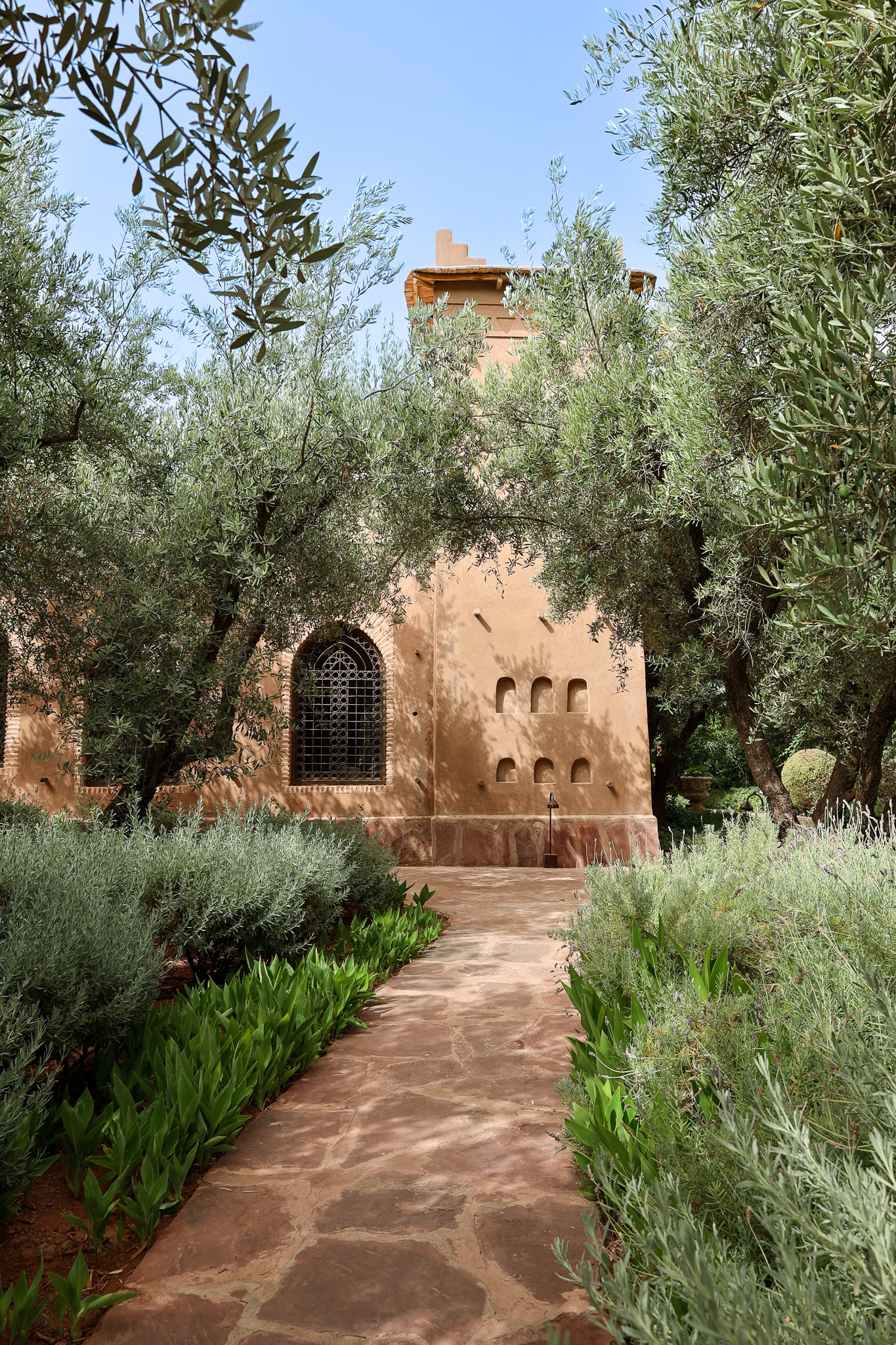
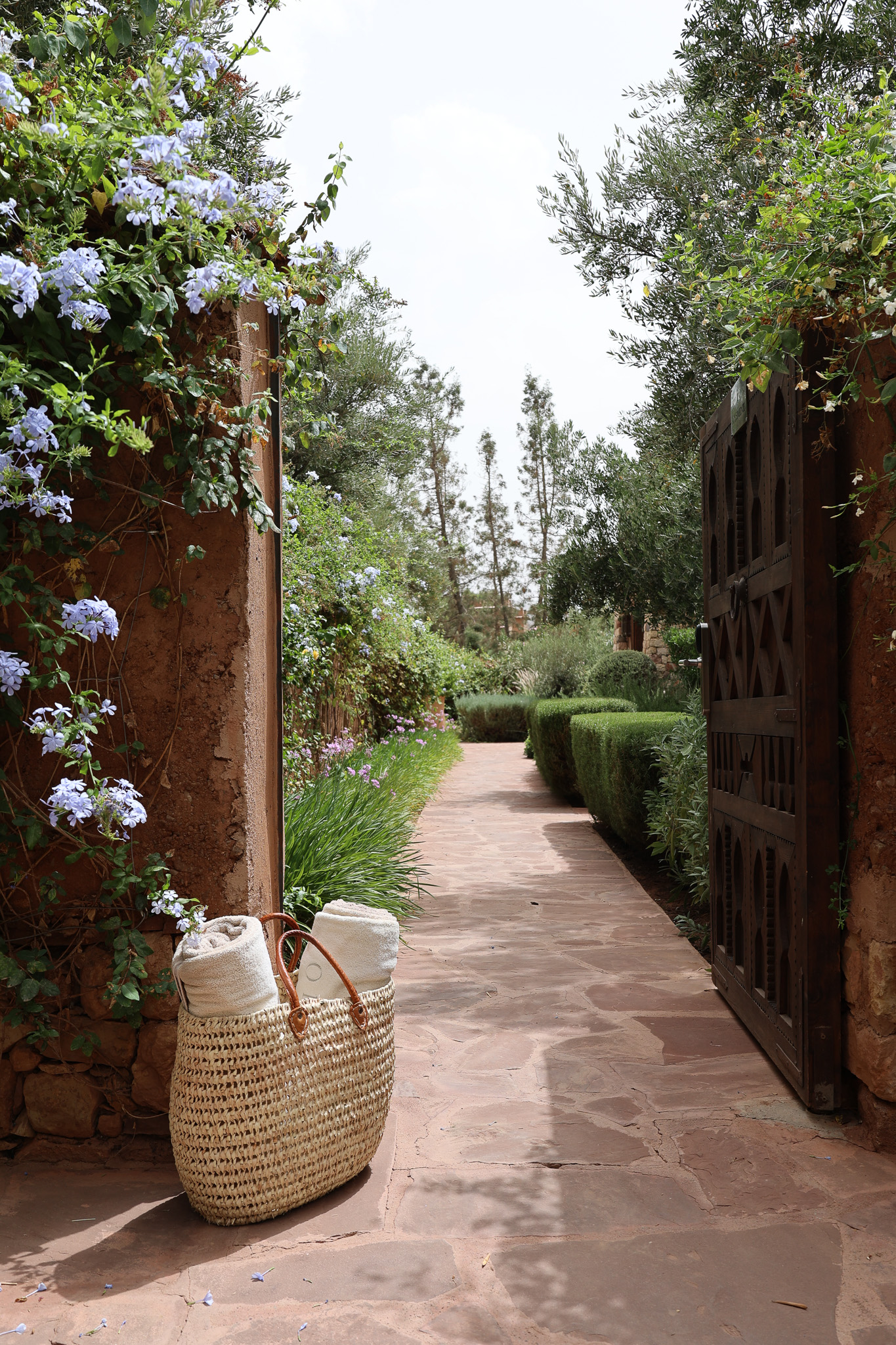
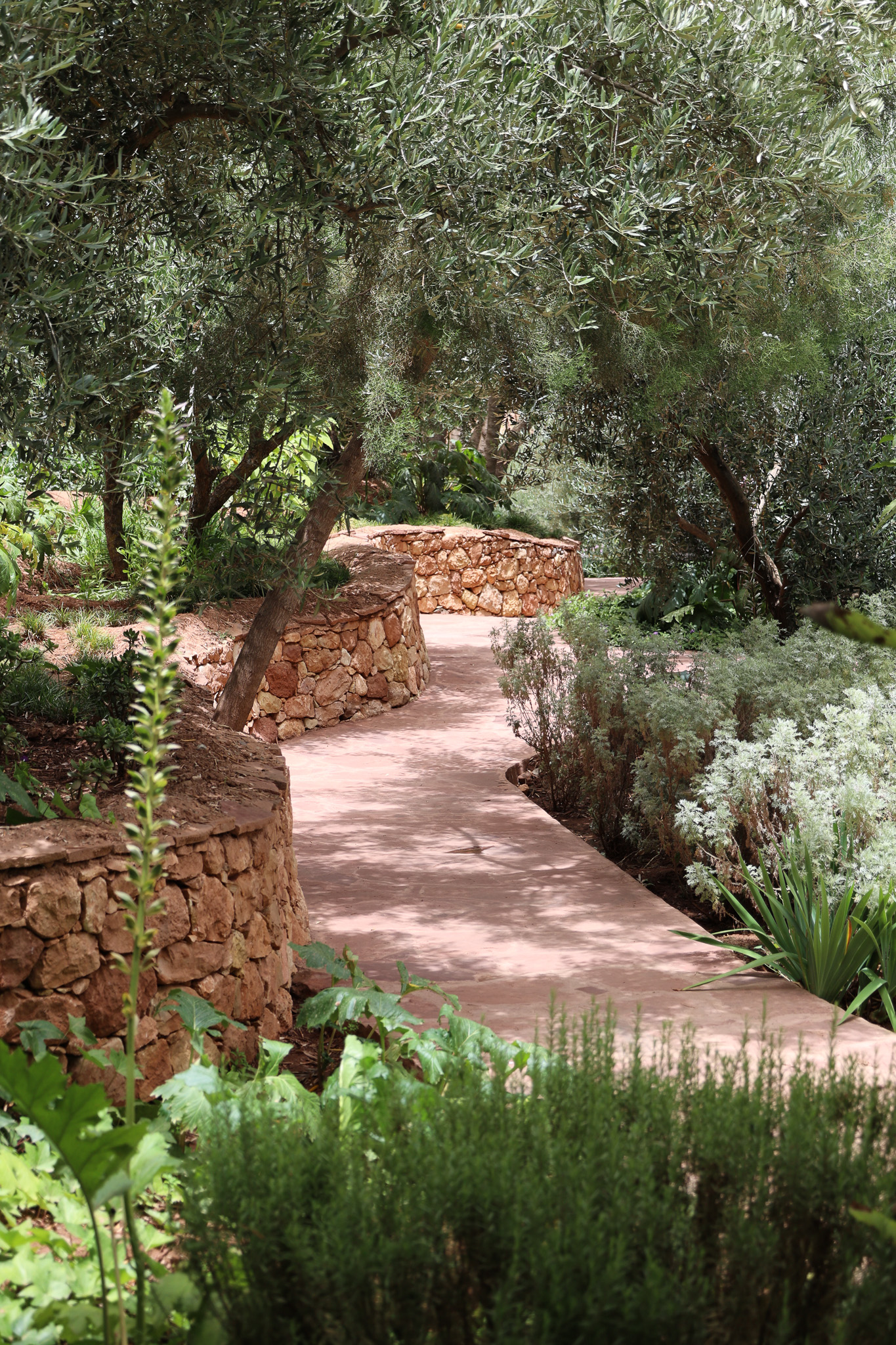
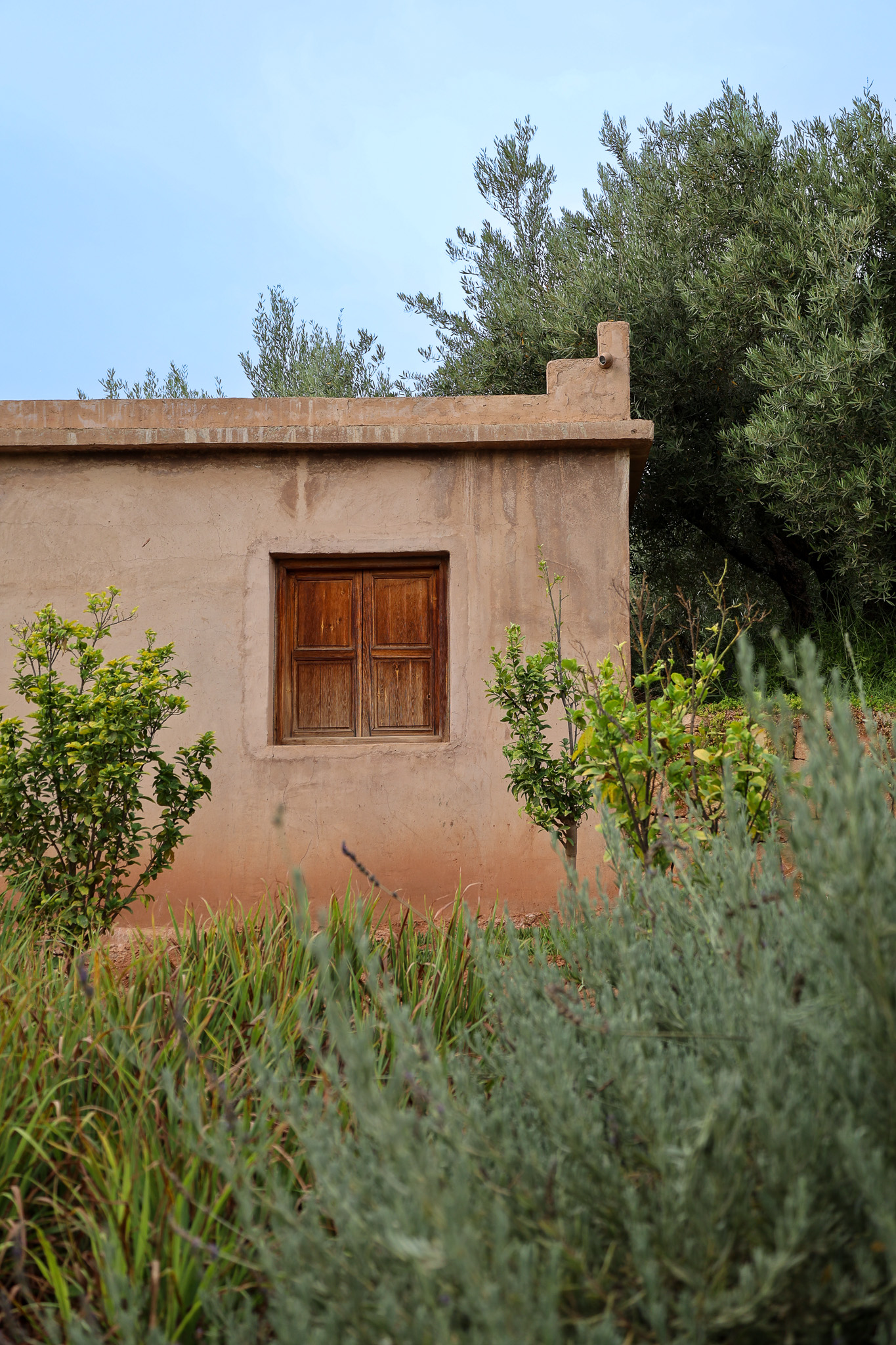
His single instruction to the builders, I was told, was that not one existing tree could be cut down. Olinto was to grow around what was already there, not replace it. Walking the grounds today, three years after opening, it is impossible to tell where the old olive grove ends and the new construction begins. The property feels as though it has simply always existed, quietly, waiting.
A House, Not a Hotel
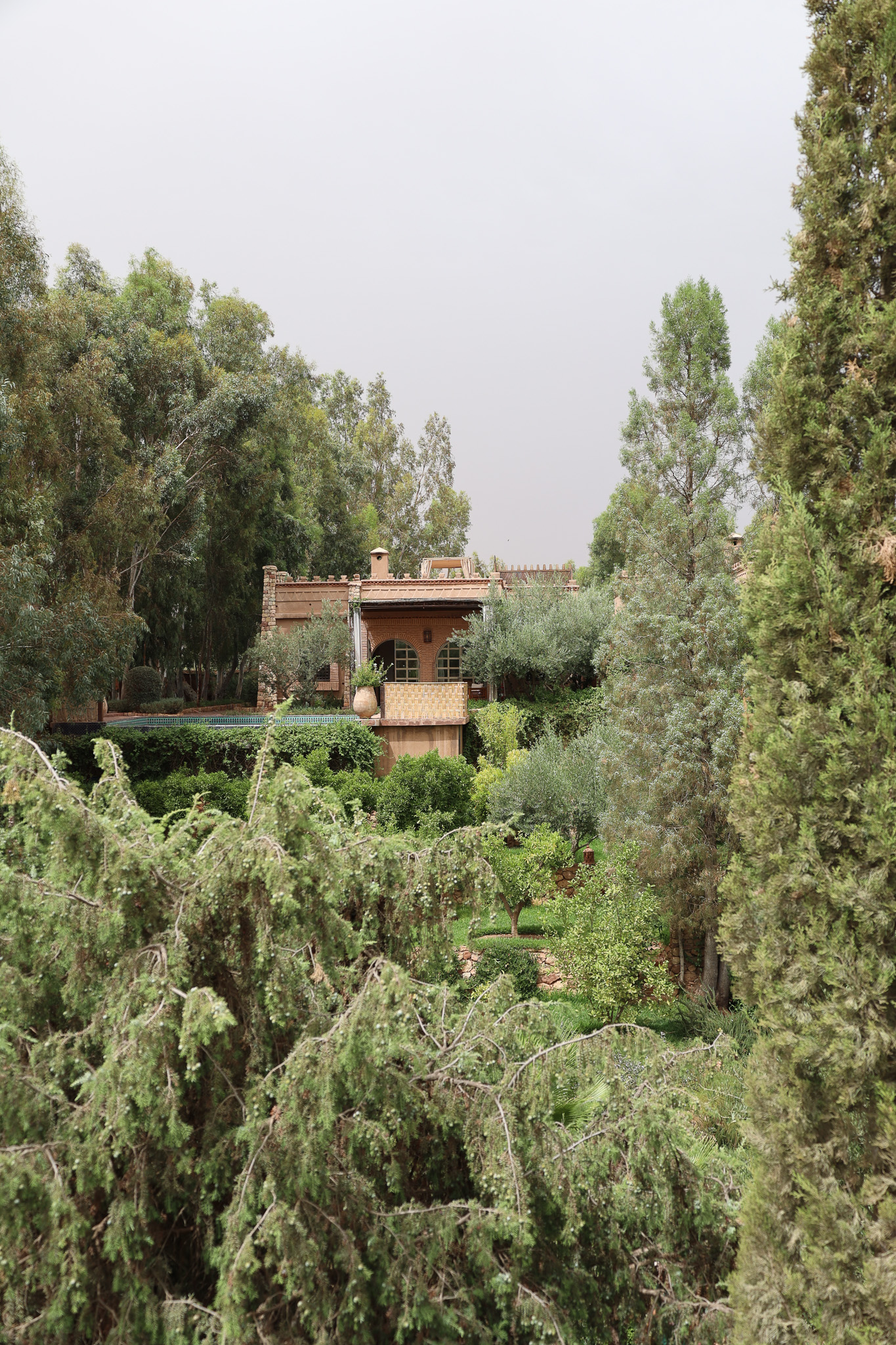
Olinto holds only nine pavilions, each named for a plant found somewhere on the property, each hidden from its neighbors by trees, walls, and careful distance. There is no sense of a resort here, no long corridors, no repeated architecture. Every pavilion is its own small house, with its own garden, its own rooftop terrace reached by an exterior spiral staircase, and, in several cases, its own heated pool that mirrors the mountains beyond it.
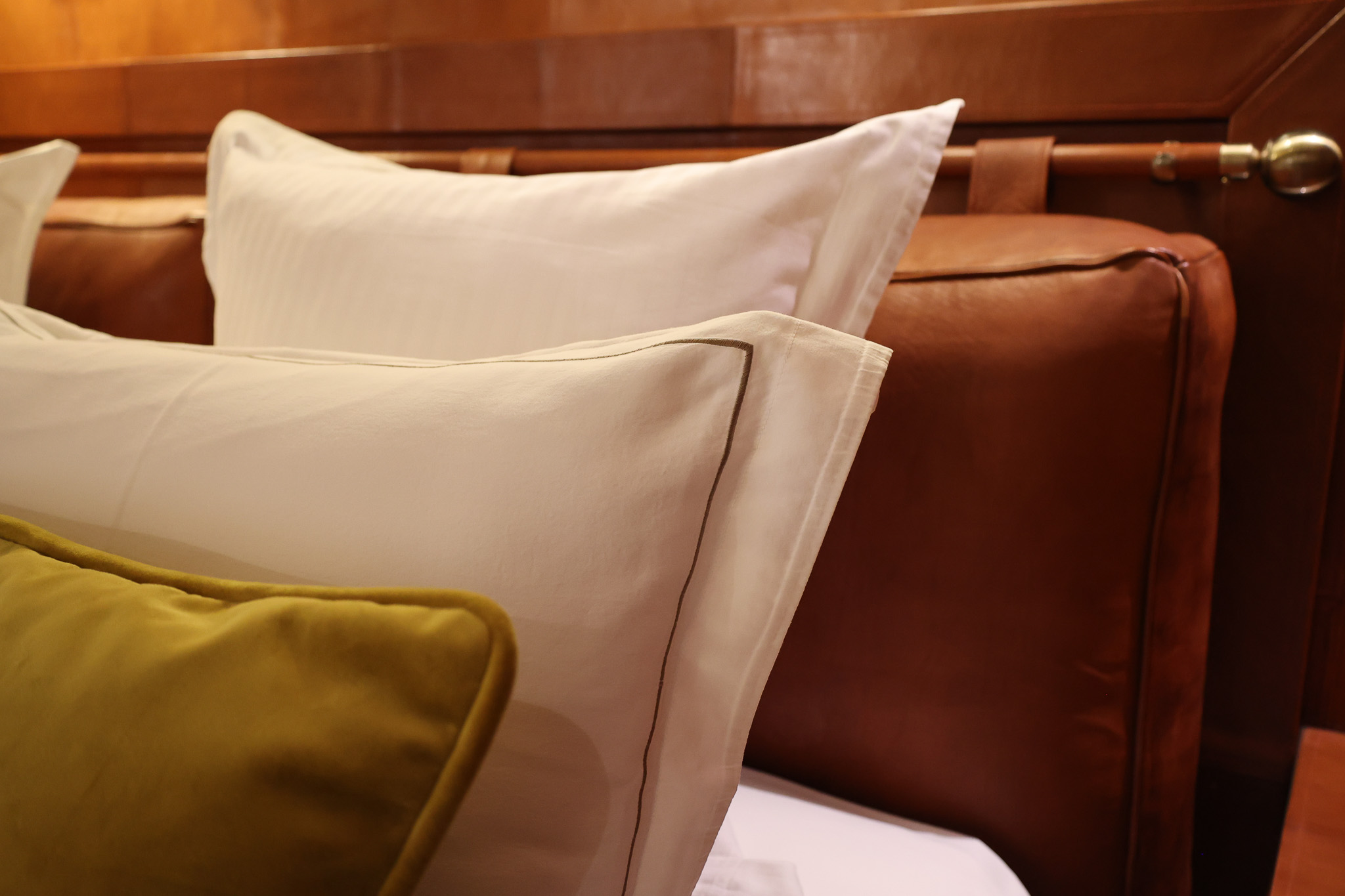
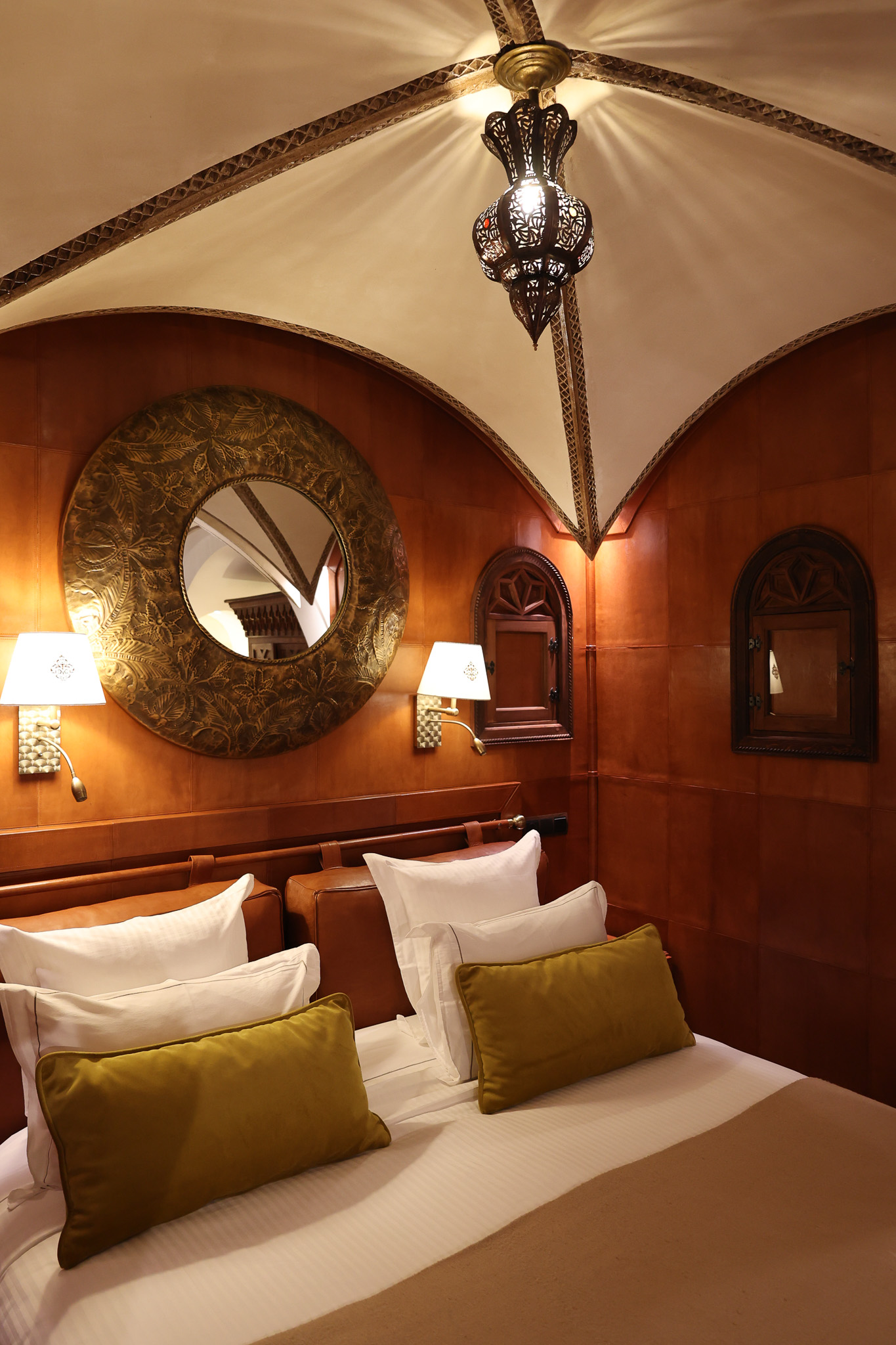
I stayed in a pavilion built around a courtyard of exposed brick and inlaid cedar ceilings, the kind of craftsmanship that takes patience rather than money to produce. Berber leatherwork softened every surface I touched. A round, hand-hammered mirror caught the afternoon light and threw it, fractured, across a headboard the color of aged cognac. Nothing shouted for attention. Everything simply worked, quietly, the way a well-tailored coat works.
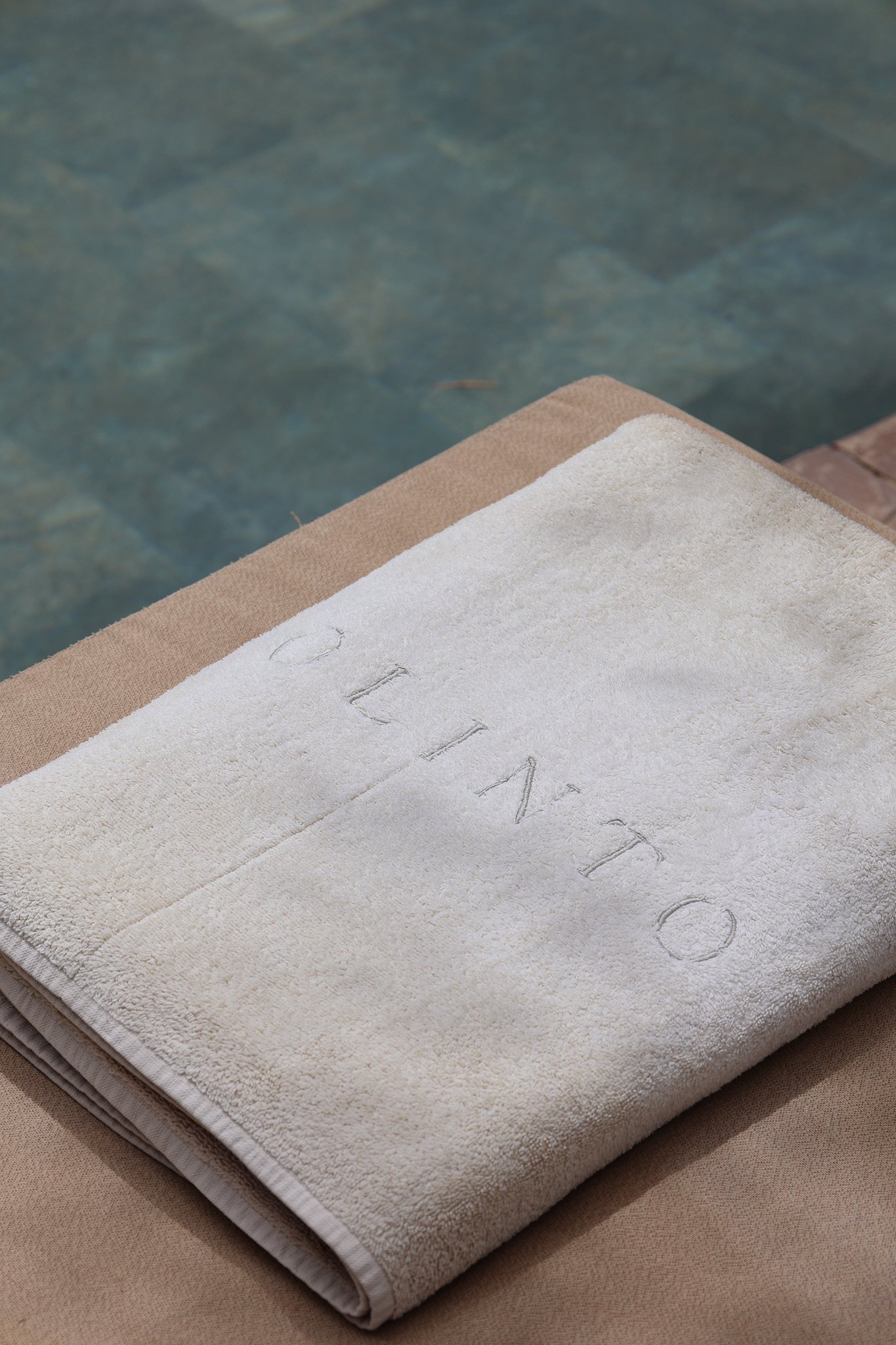
What struck me most, lying in that room at dusk, was the absence of any pressure to do anything at all. No welcome folder listing excursions. No itinerary waiting to be filled. Just the sound of water somewhere in the garden, and the particular, specific silence of a valley that the modern world has mostly forgotten to visit.
The Living Room of a Collector
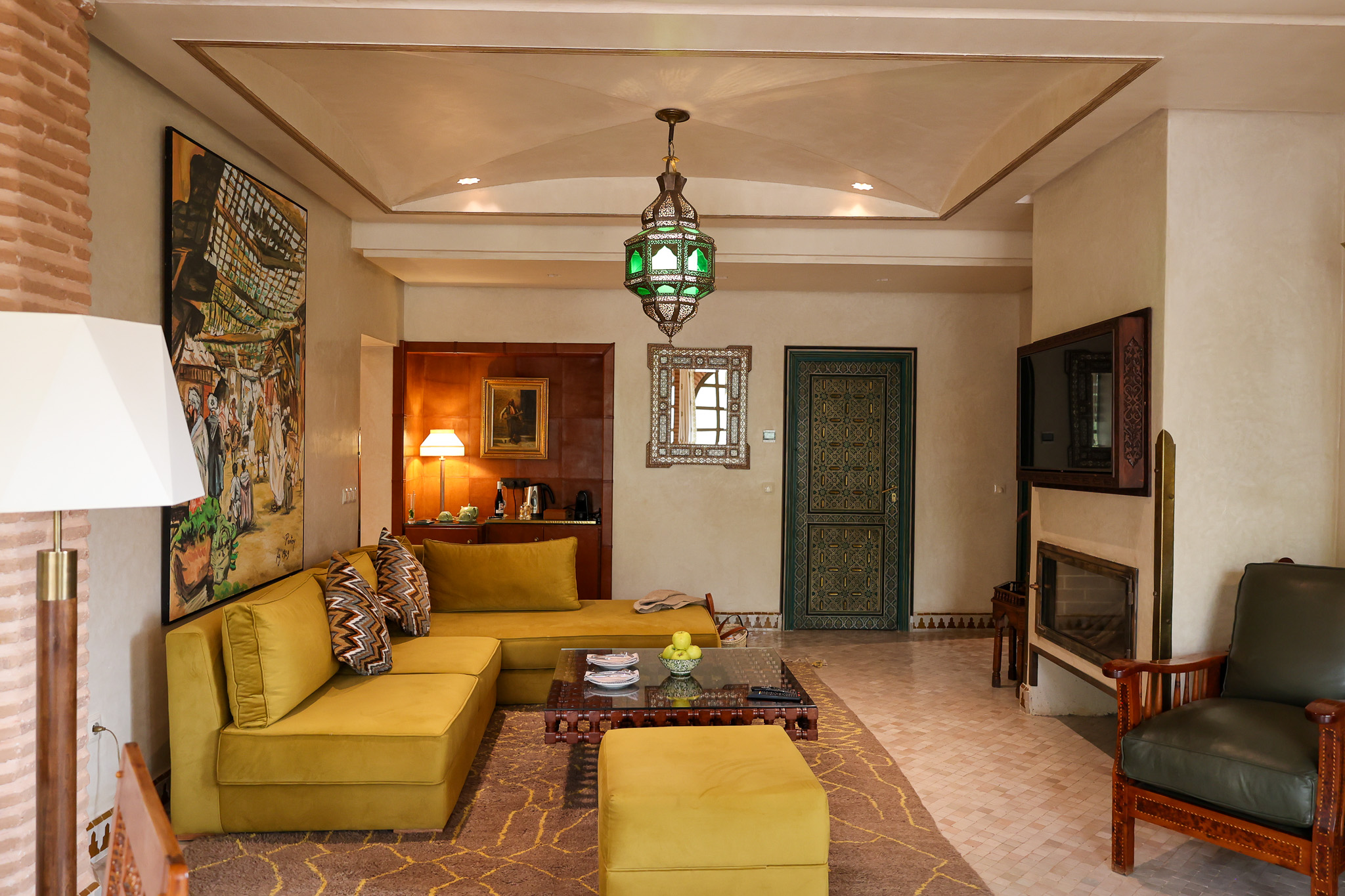
Olinto's public rooms sit on the far side of a small stream that splits the property in two, and stepping into them feels less like entering a hotel lobby than being welcomed into a private salon. Which, in truth, is exactly what it is. Fabrizio has spent a lifetime collecting, antique furniture, North African art, paintings that tell small stories rather than large ones. A market scene by the French Orientalist painter Pontoy, dated 1929, hangs above a mustard velvet sofa, and it is entirely typical of the property's approach to decoration, nothing acquired for effect, everything acquired because someone loved it first.
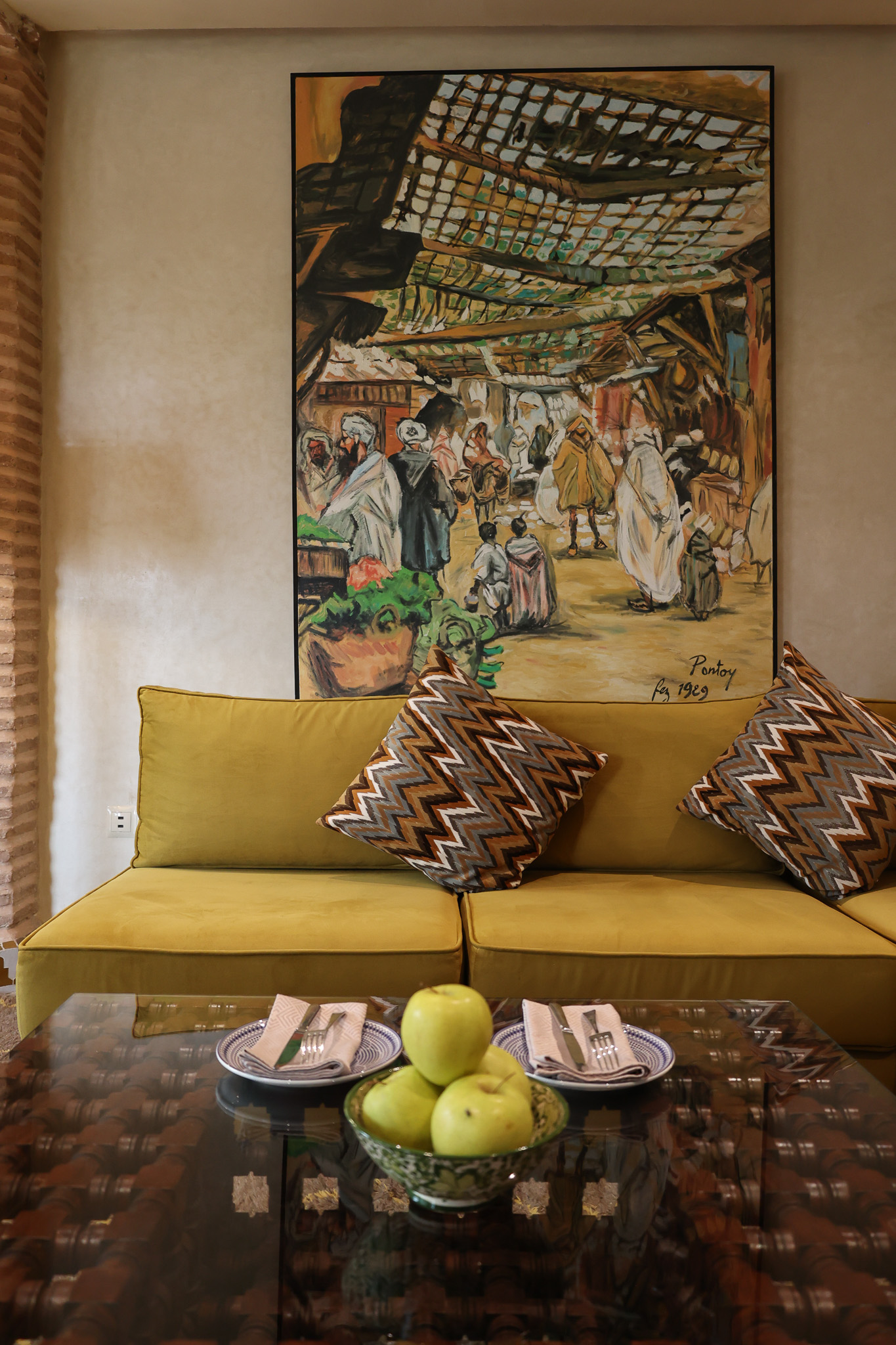
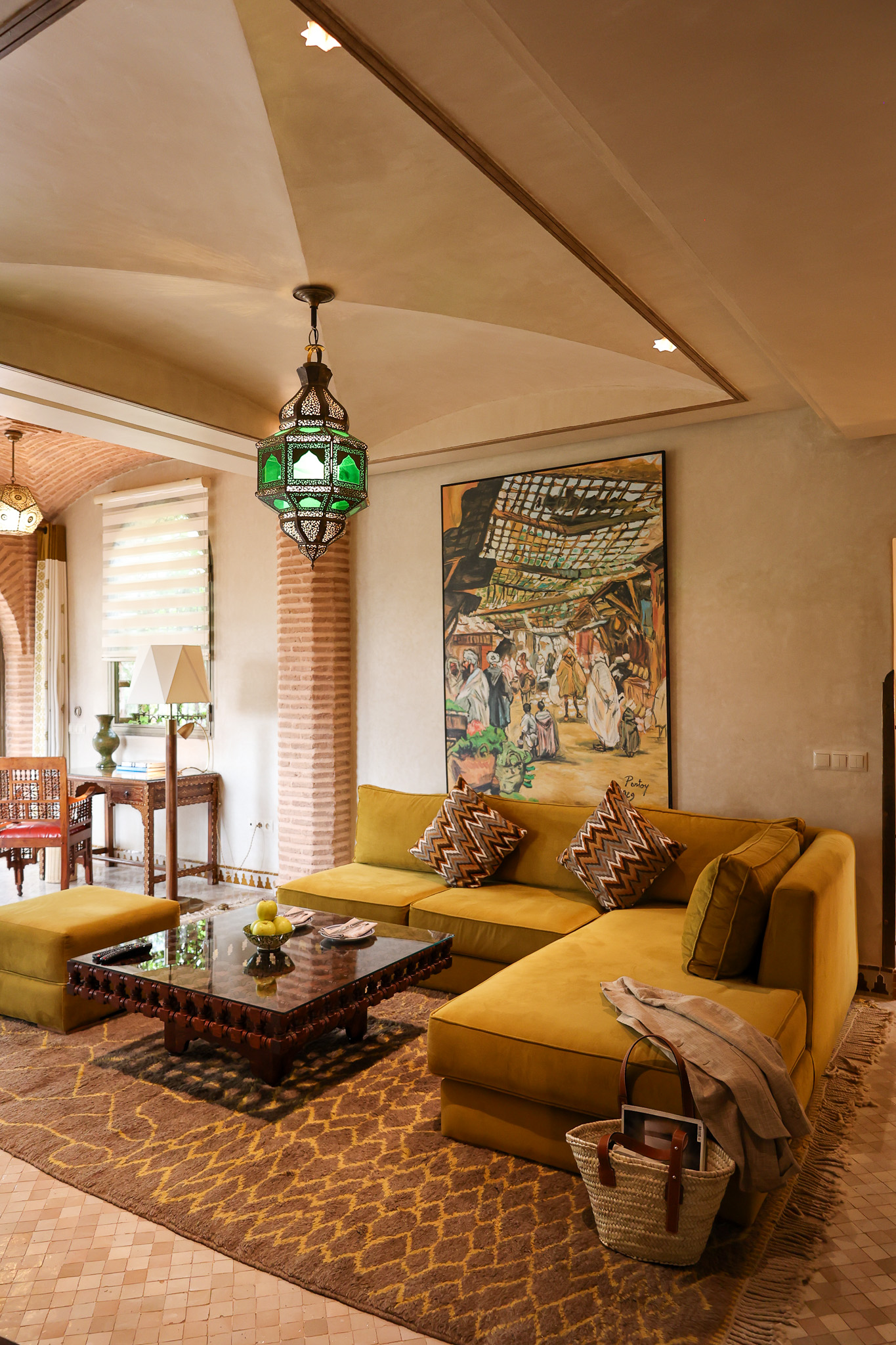
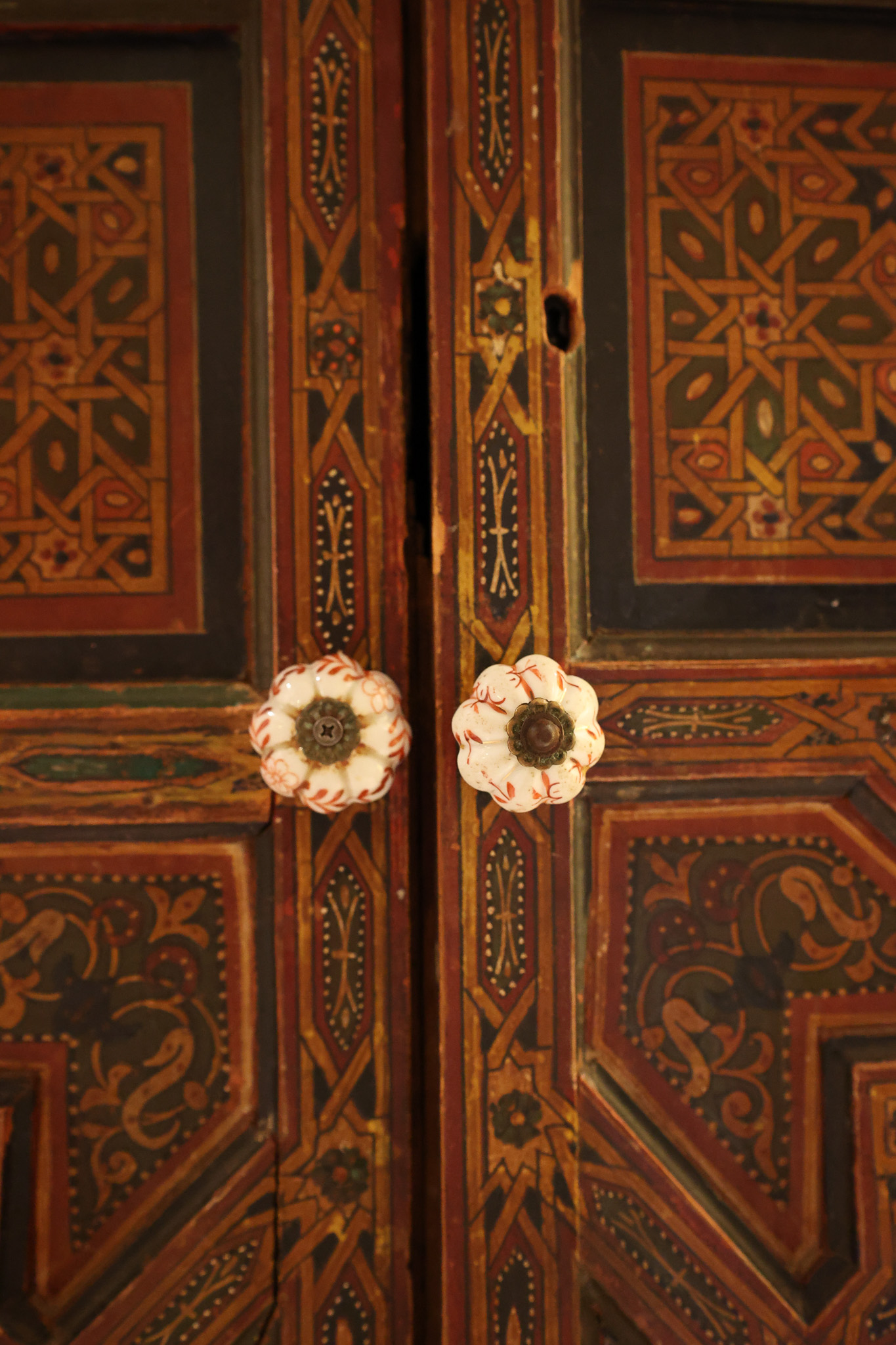
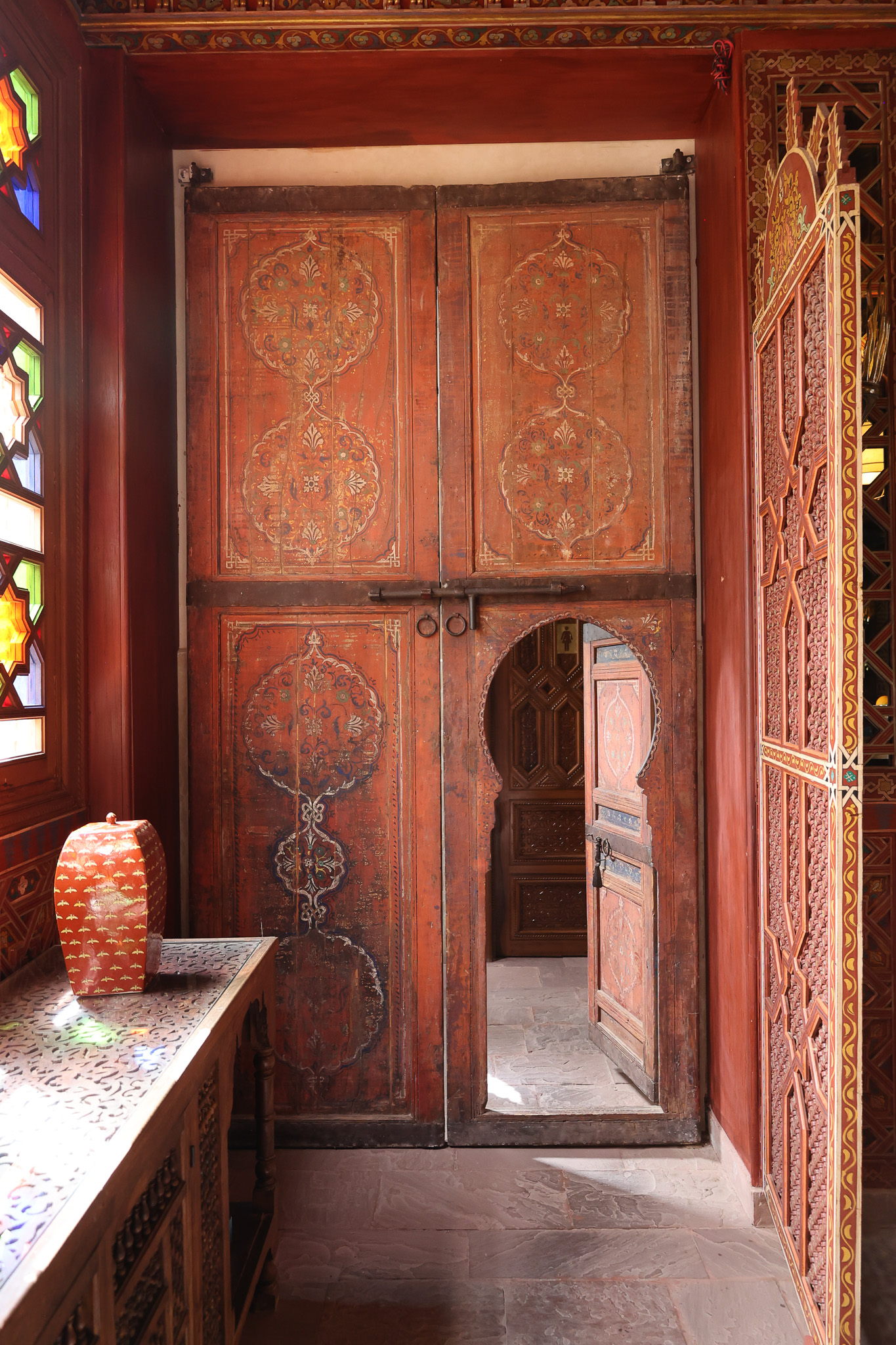
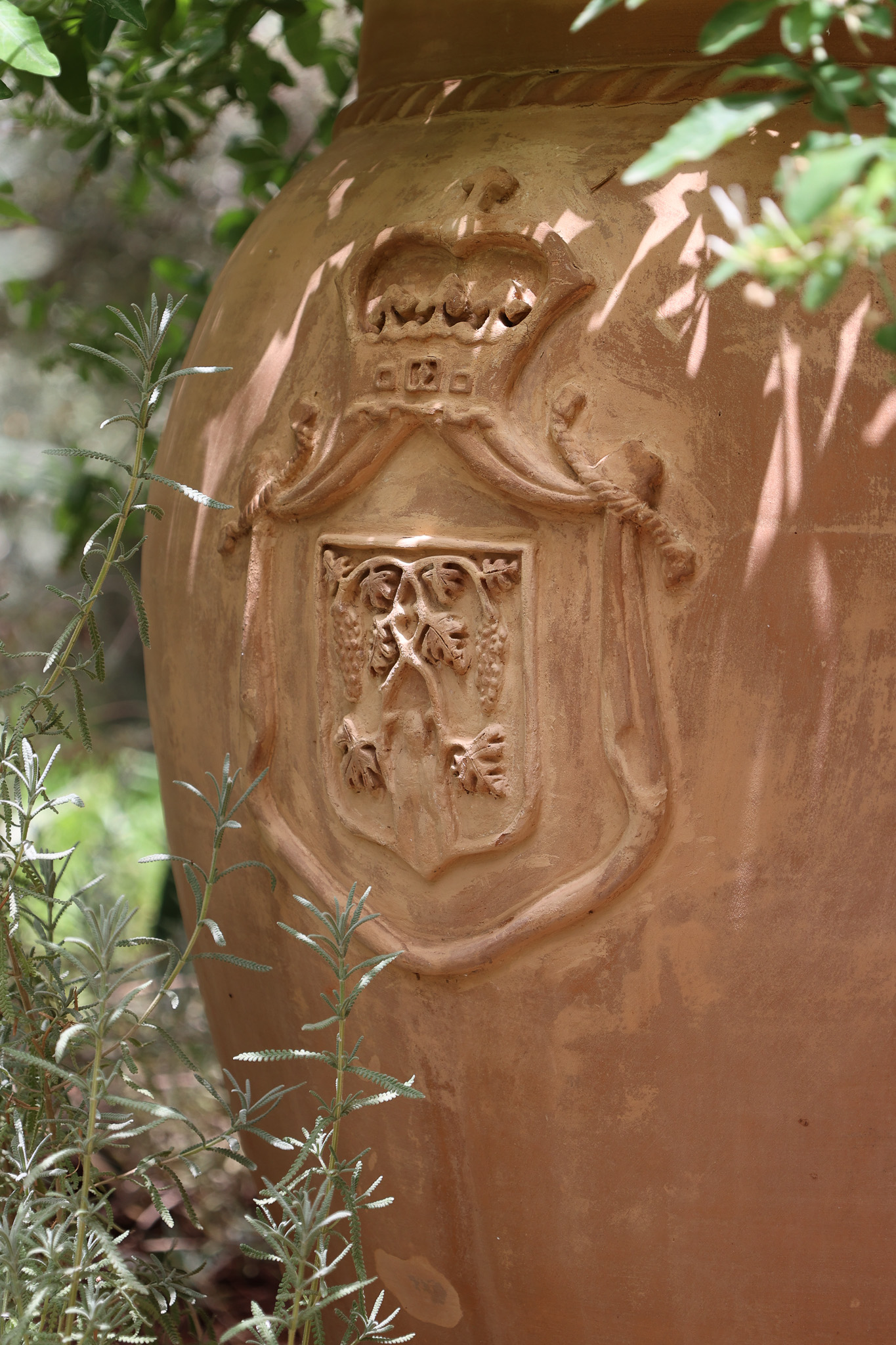
There is a fireplace for the cooler evenings that the mountain air brings even in high summer. There is a mother of pearl mirrored frame so intricate it deserves its own five minutes of attention. There are doors, painted centuries ago and never restored past the point of honesty, that open onto rooms scented faintly of orange blossom and cedar smoke.
And there is music. Fabrizio is a lifelong devotee of classical performance, a passion, again, that runs through generations of his family, and he regularly invites rising and established pianists into his own living room for intimate recitals that guests are welcome to attend, free of charge, almost as though they had simply been invited to a friend's house for the evening. Because, in a sense, they have.
Days Built for Nothing in Particular
If there is a single philosophy that governs Olinto, it is the deliberate removal of obligation. Adults only, deliberately so, in order to preserve the particular hush the property depends on. No pressure to explore, though the Atlas foothills offer hiking, mountain biking, and horse trails for those who want them, and the twelfth-century Tinmel Mosque sits an hour further up the valley for anyone curious enough to leave.
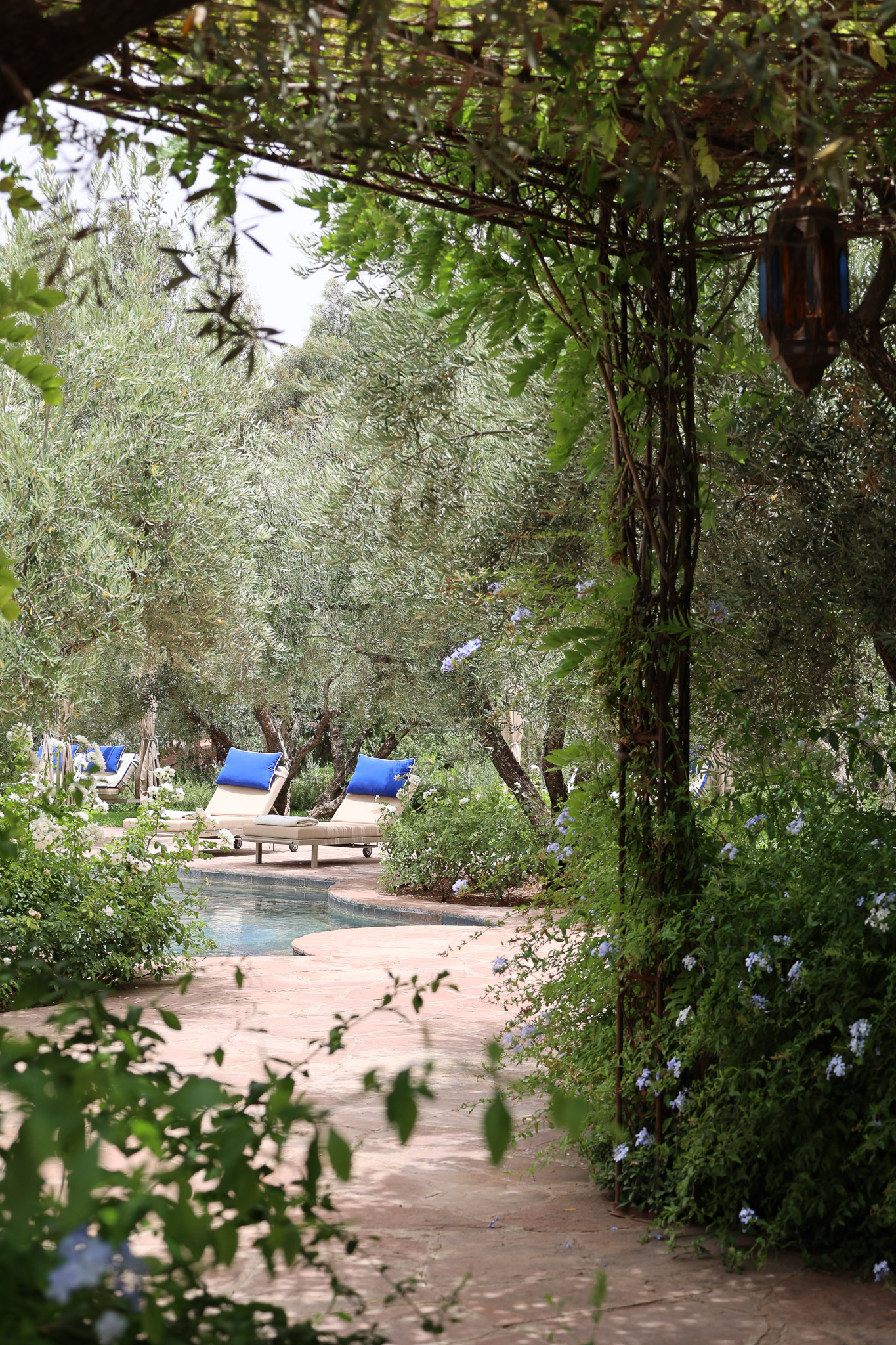
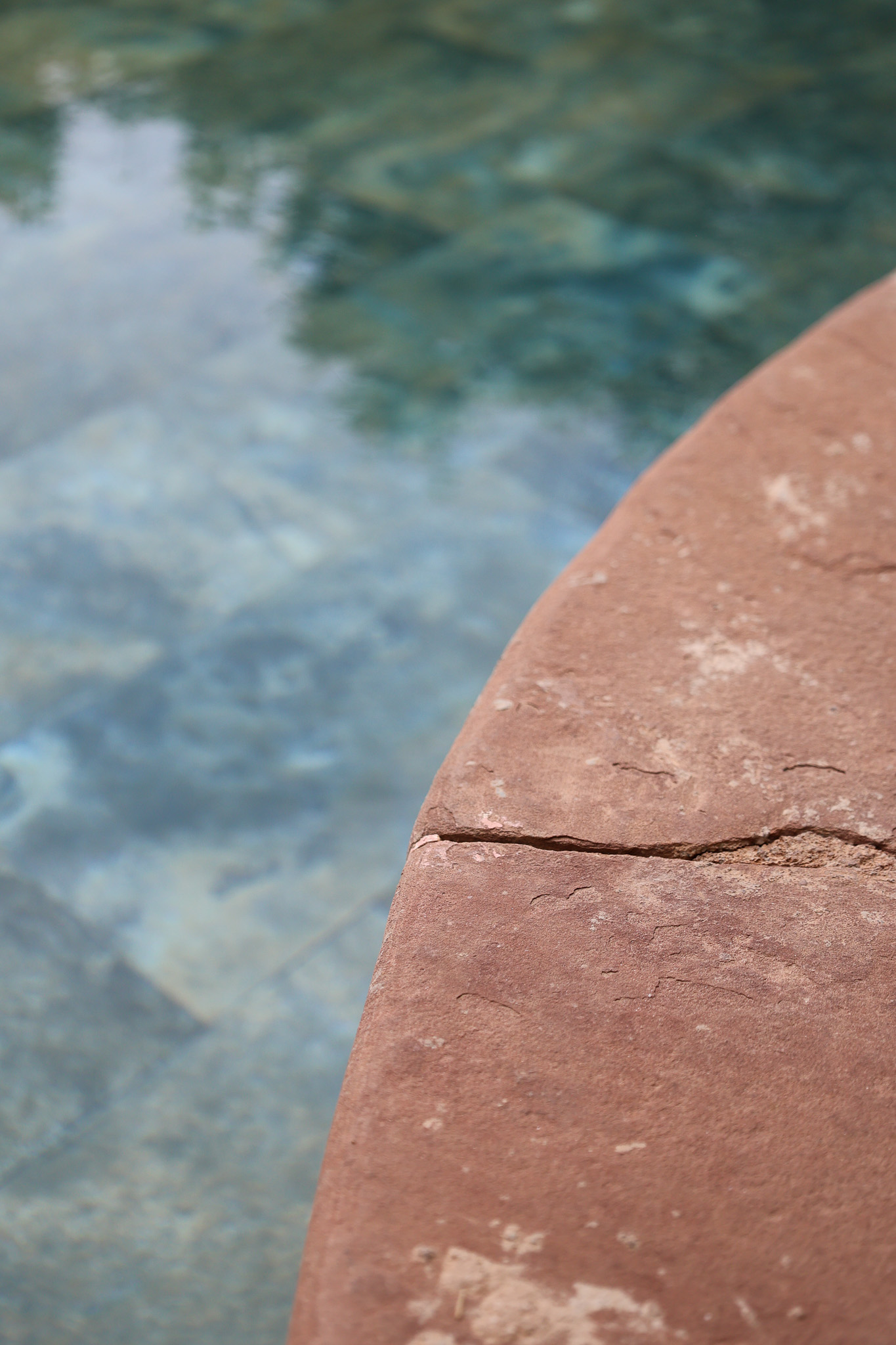
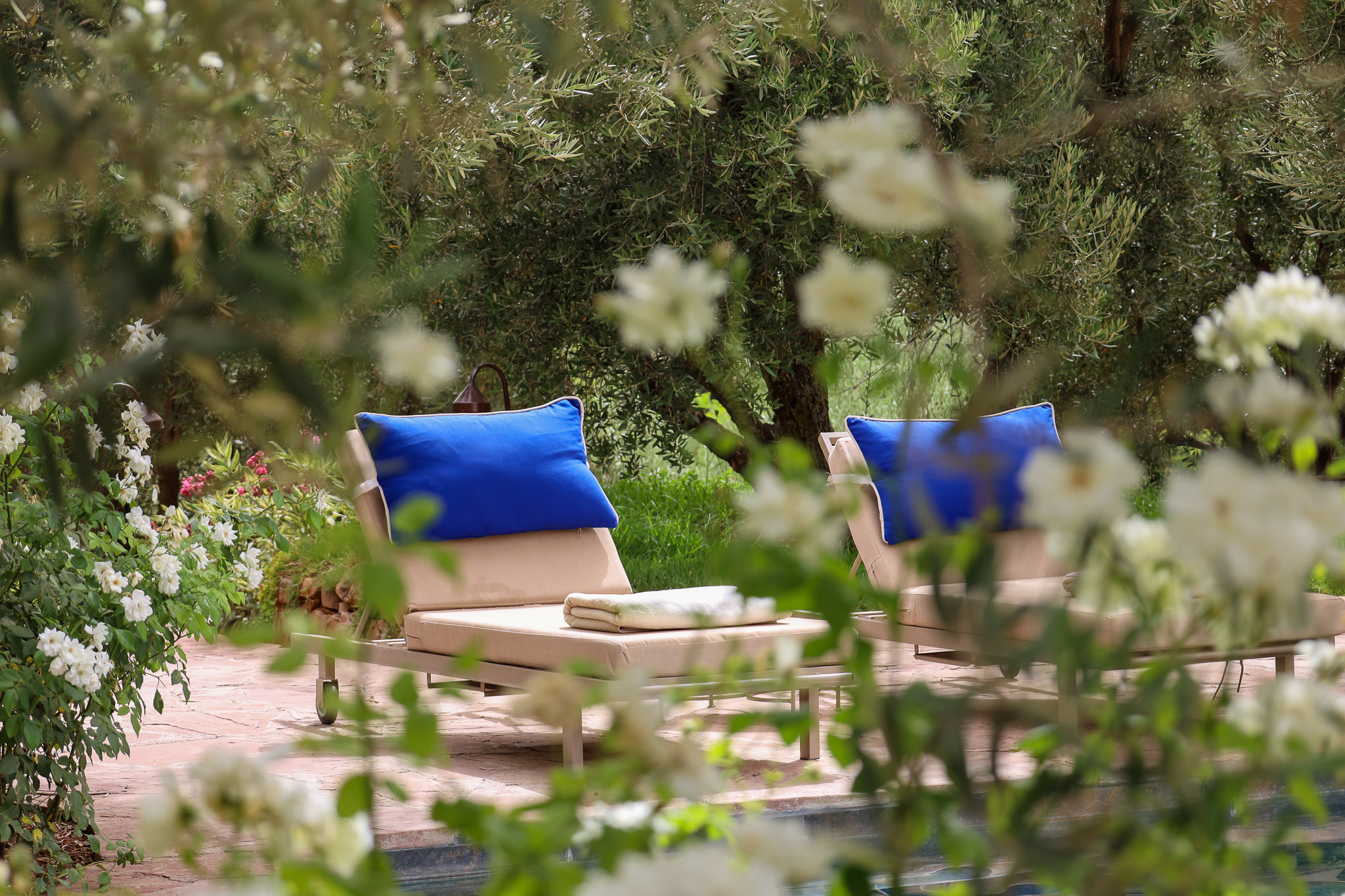
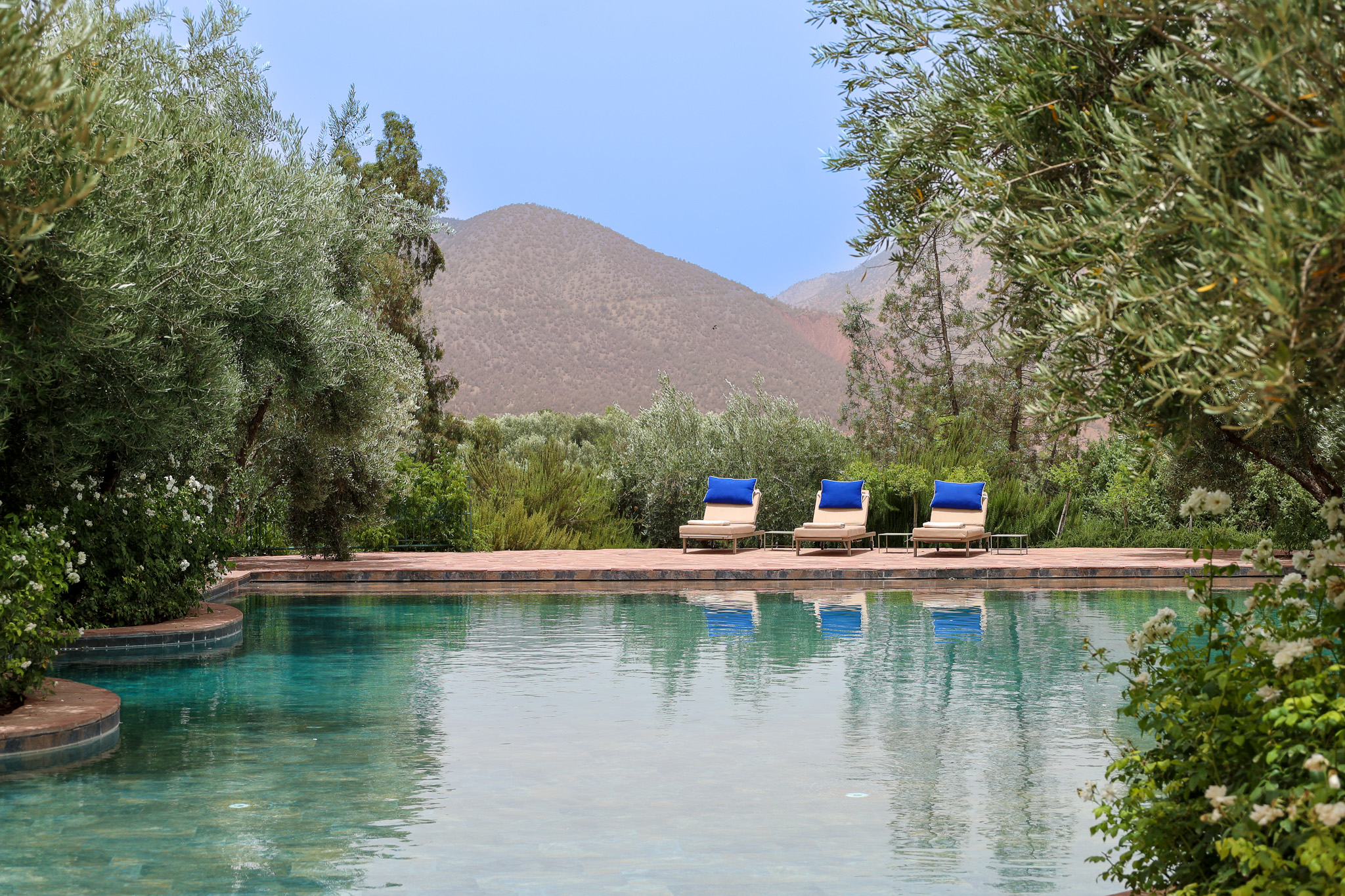
Most guests, myself included, find they simply do not want to leave. The main pool, an irregular, emerald expanse built carefully around olive and oleander trees old enough to have outlived several owners of this land, invites hours of doing precisely nothing. Loungers dressed in cobalt blue sit beneath a pergola heavy with wisteria, close enough to the water that you can hear it lap gently against the tile without ever having to move toward it.
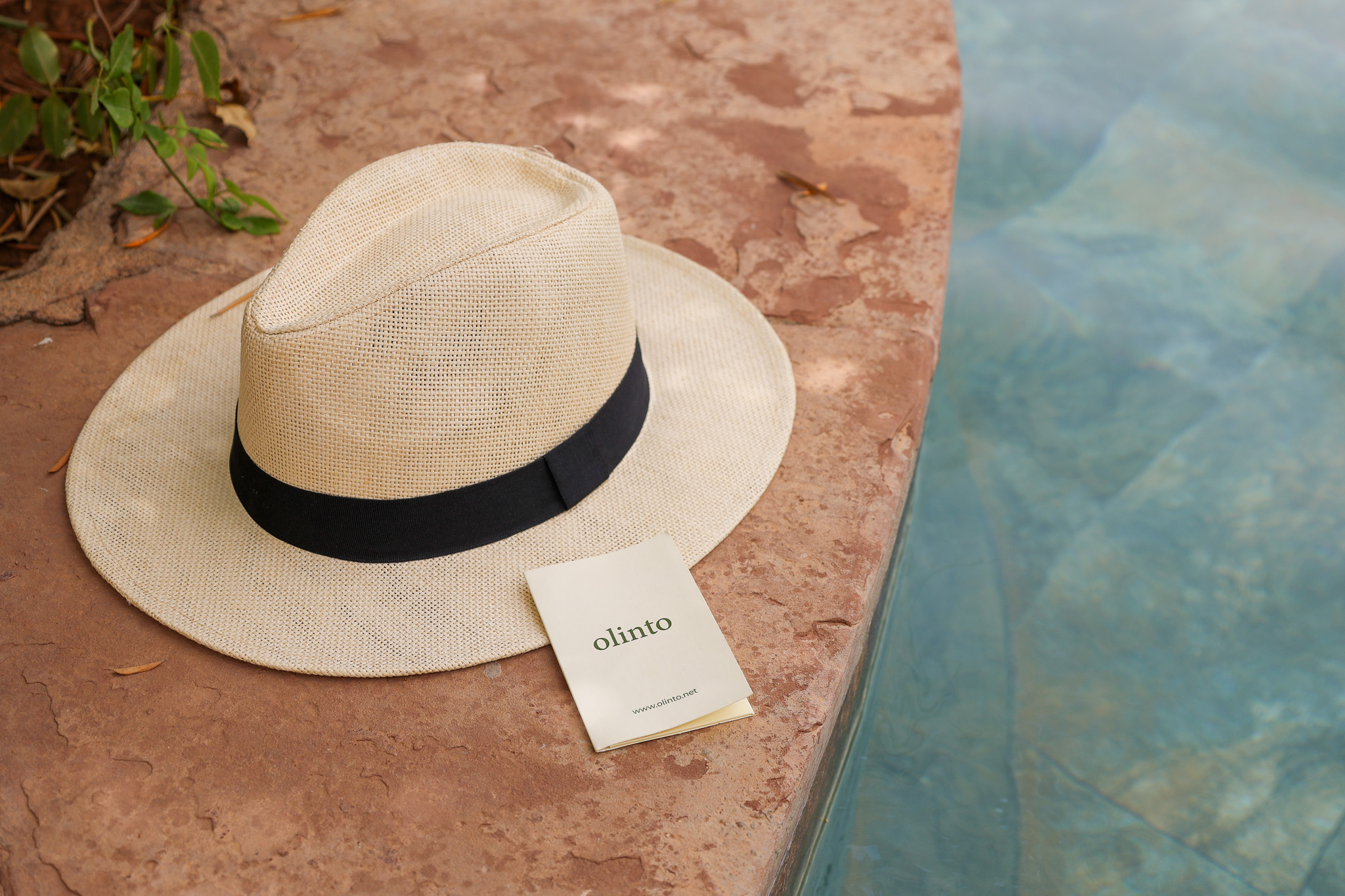
In the late afternoon, staff appear with mint tea and small pastries at almost exactly the moment you begin to want them, then vanish again without a word. It is a rhythm that seems to have been designed, deliberately, to make time itself feel slower. I found myself, by the second day, not checking my watch at all.
Table, Terrace, and the Sound of Water
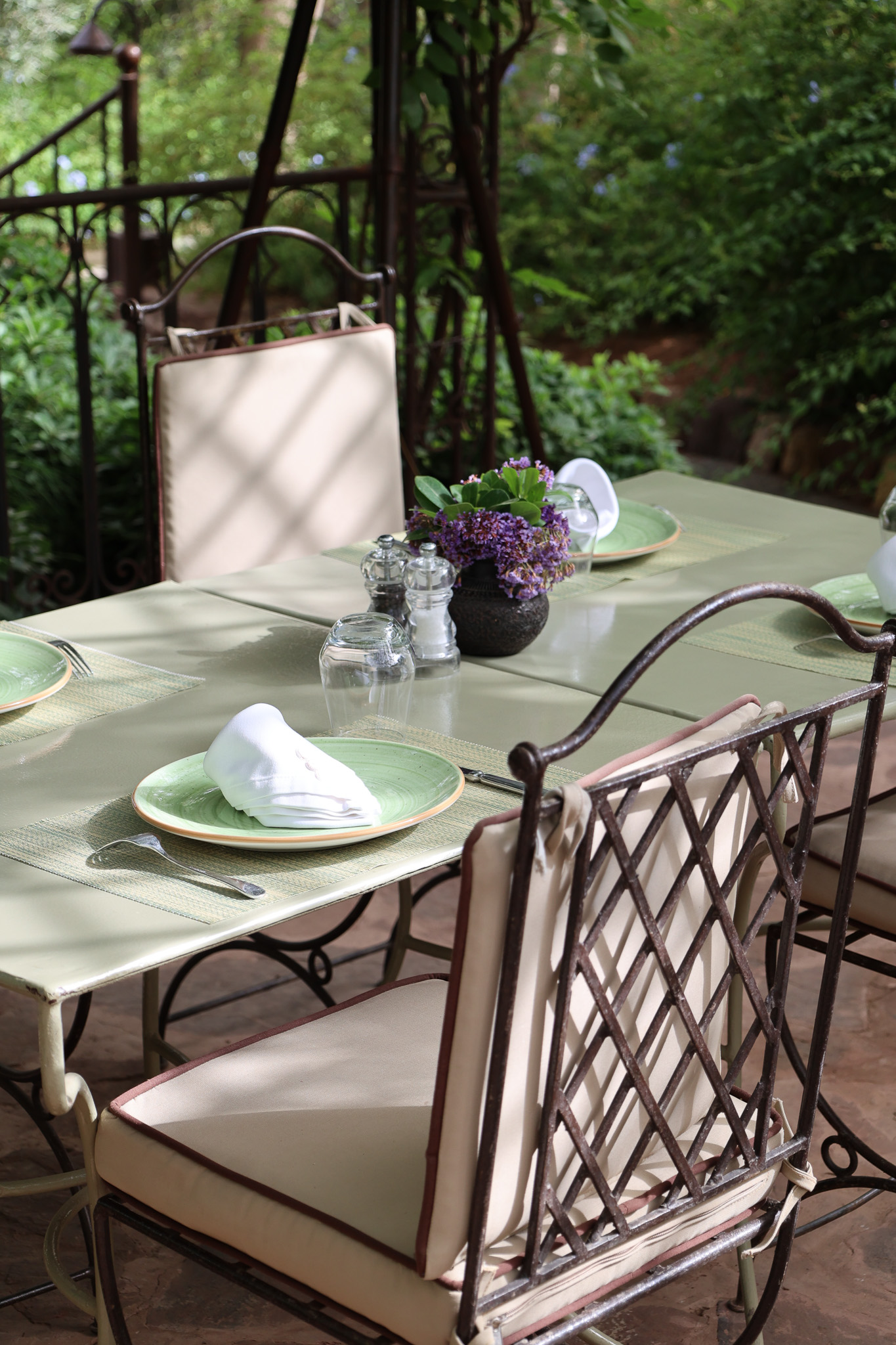
Dinner at Olinto happens outdoors whenever the season allows, at long tables set beneath climbing vines, the mountains turning violet as the light drops. The kitchen draws on Berber tradition, tagines built slowly, vegetables sourced from the surrounding valley, bread baked the same morning it is served.
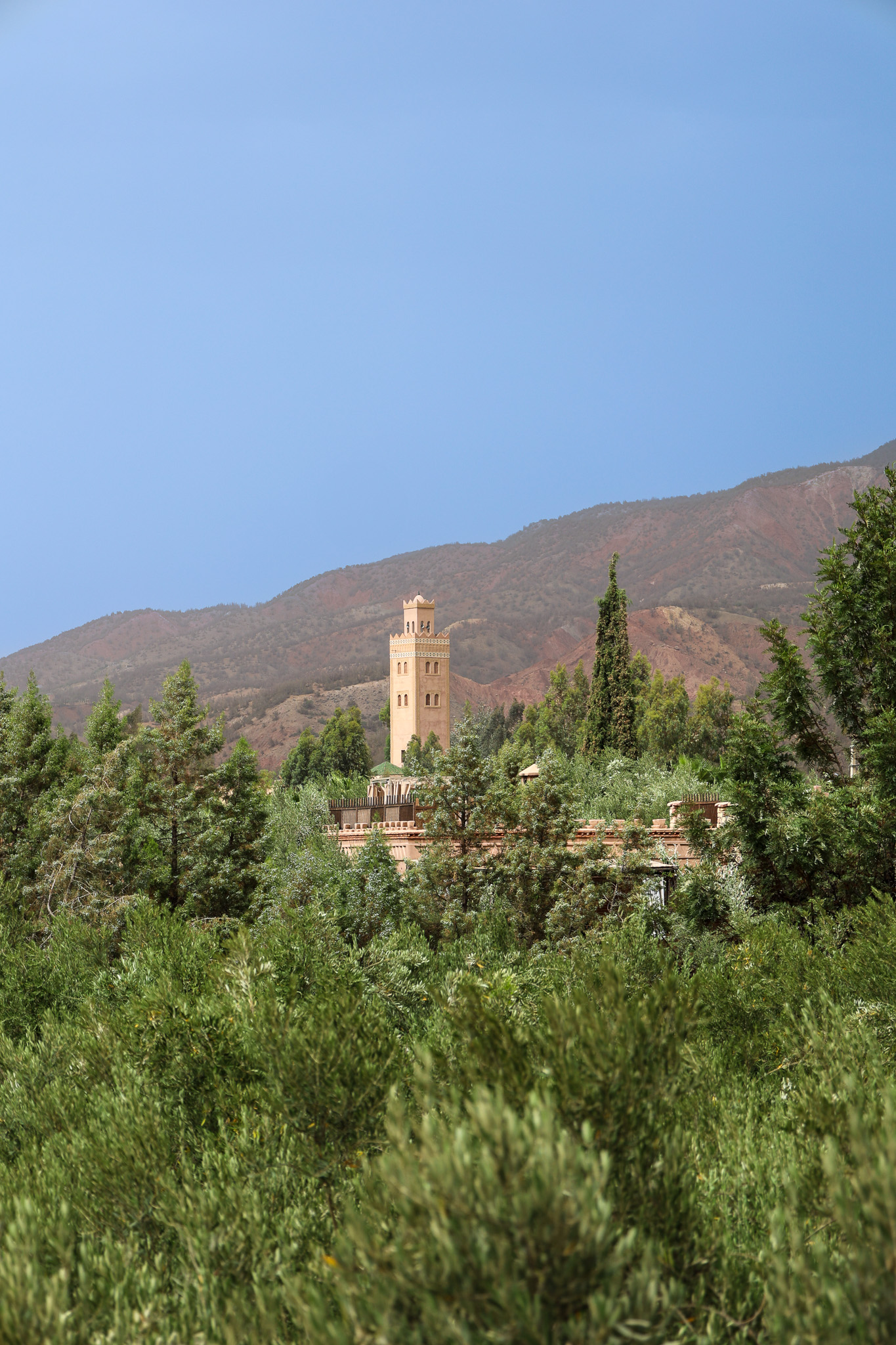
Beyond the terrace, the minaret of the Marigha mosque rises above the olive canopy, a reminder that this valley has had its own quiet rhythms for centuries, long before Fabrizio arrived to build a garden around them.
The Prince's Real Achievement
What makes Olinto extraordinary is not its craftsmanship, considerable as it is, nor its setting, spectacular as that is too. It is the sense, present in every corner of the property, that one man built exactly the place he himself wanted to disappear into, and then, generously, decided to let a handful of strangers disappear into it with him.
Fabrizio still lives on the property. Guests who stay long enough are sometimes invited into his own living room, for a piano recital, an aperitif, a conversation about the family history layered into every object around them. It is a rare thing, in an industry built increasingly on scale and repetition, to find a place still shaped entirely by one person's taste, patience, and understanding of what real rest requires.
I left Olinto the way one leaves a house rather than a hotel, reluctant, a little quieter than when I arrived, already planning a reason to return. Somewhere behind me, the stream was still moving through the olive trees, unhurried, going nowhere in particular. Exactly as intended.